ADG/End-to-End Registry Services

FOR TLD REGISTRY OPERATORS

Everything you need to run a TLD registry business.

ADG brings business strategy, RSP platforms, DNS, hardware, compliance, registrar operations, trust and safety, continuity, and growth into one coordinated service for TLD operators worldwide.

English and Indonesian support is available for new launches, migrations, and upgrades to existing registry operations.

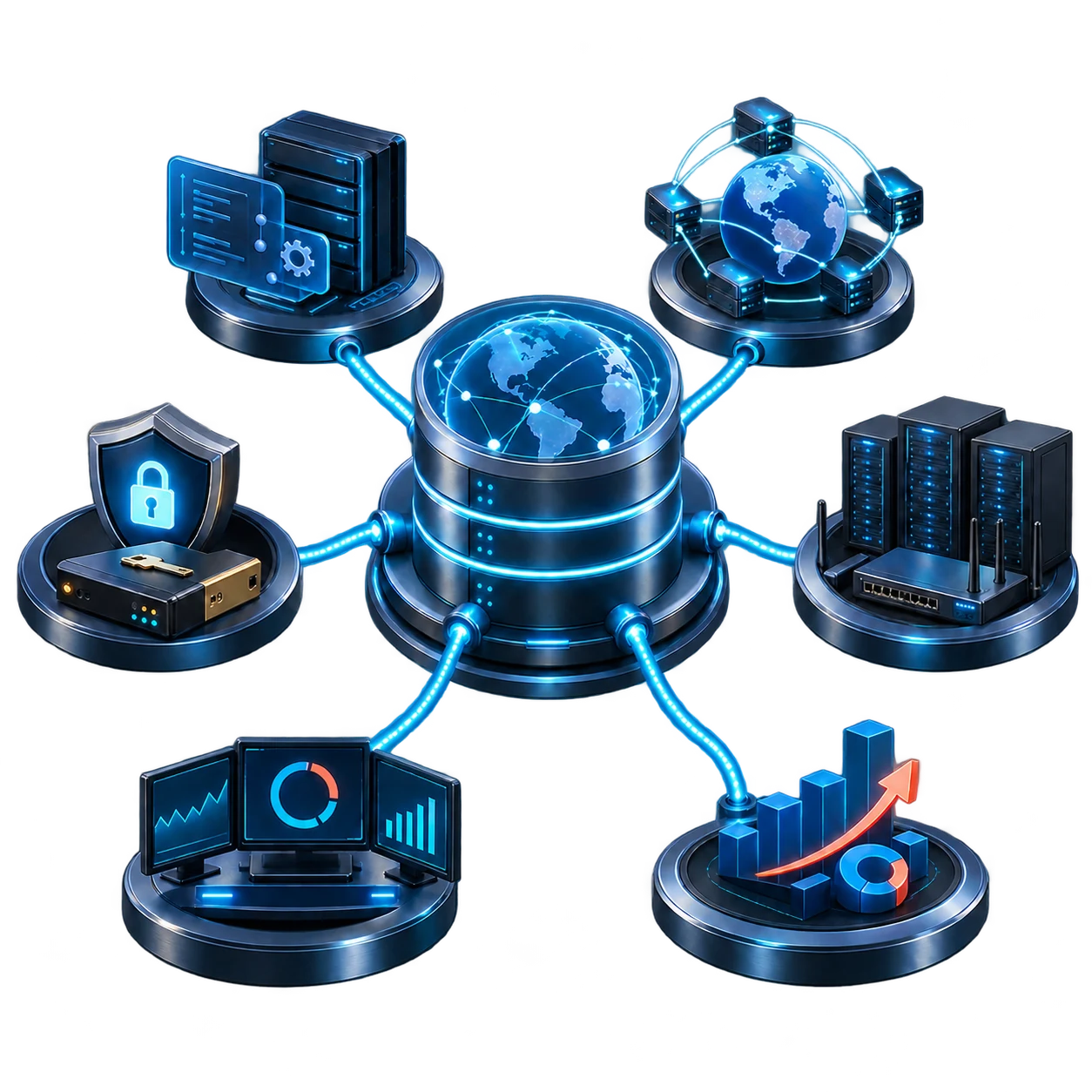
TLD registry ecosystem connecting software, global DNS, security, hardware, operations, and business growth

ONE PARTNER, ONE OPERATING PLAN

A registry is more than a backend. It is a business that must keep running.

Operating a TLD takes more than DNS and a domain registration platform. Operators must bring policy, commercial models, registrars, software, hardware, security, reporting, support, and recovery into one dependable operation.

ADG helps design that complete system. Start with core RSP services, select individual modules, or engage ADG as an end-to-end technical partner from planning through operations and continuous improvement.

One architecture and clear ownership map
Less coordination across vendors
Measurable launch, migration, and operations
Systems ready to monitor, audit, and extend

ONE END-TO-END PROGRAM

One partner to plan, build, launch, operate, and grow your TLD.

End-to-end means that every business, platform, infrastructure, readiness, operations, and growth decision connects through one architecture and ownership map.

ONE ACCOUNTABLE PARTNER

Not a collection of vendors. One delivery path from the first decision to daily operations.

ADG coordinates registry, DNS, software, hardware, security, and consulting specialists so handoffs, risks, and ownership remain clear throughout the TLD lifecycle.

01

Plan

02

Build

03

Launch

04

Operate

05

Grow

REGISTRY LIFECYCLE

Six responsibilities that make the service end to end.

01

Registry & commercial strategy

Define why the TLD exists, who it serves, how the registry creates value, and which operating capabilities it needs.

  • Business model, market, and registration policy
  • Pricing, premium domains, and registrar channels
  • Launch and monetization roadmap
Explore growth & monetization strategy
02

Registry platform & RSP

Provide the technical backend that processes domain transactions and connects the registry with registrars and related systems.

  • SRS/EPP and domain lifecycle
  • WHOIS, RDAP, data escrow, and reporting
  • Portals, APIs, billing, and registrar integration
Explore RSP services
03

DNS & critical infrastructure

Build the layer that keeps the TLD reachable, trusted, secured, monitored, and recoverable.

  • Global authoritative Anycast DNS
  • DNSSEC, HSMs, and key management
  • Redundancy, monitoring, and disaster recovery
Explore DNS infrastructure
04

Readiness, migration & launch

Make sure systems, registrars, data, procedures, and teams are ready before a new registry launches or an existing service moves.

  • Technical and ICANN readiness
  • Testing, registrar onboarding, and documentation
  • Migration, cutover, and stabilisation
Explore new gTLD consulting
05

Managed operations & security

Run compliance, reporting, registrar, trust and safety, continuity, public services, and data governance through one operating rhythm.

  • Compliance, reporting, and evidence management
  • Registrar operations and DNS abuse response
  • Continuity, data governance, and public services
Explore Managed Registry Operations
06

Growth & continuous improvement

Use registry data to improve retention, distribution, revenue, registrar experience, and the next generation of services.

  • Renewals, pricing, and premium inventory
  • Aftermarket, channels, and partnerships
  • Analytics, experiments, and product roadmap
Explore TLD growth

DELIVERY ENABLERS

Capabilities that strengthen every stage.

These capabilities are used when the registry architecture or operating model needs custom software, physical infrastructure, integration, automation, or private AI.

Each capability can be used modularly. Scope, SLAs, integrations, and ownership are defined in the proposal and service agreement.

END-TO-END SCOPE

From business model to day-to-day registry operations.

Use each area as a standalone service or combine them into one implementation program.

Registry strategy & business model

Define target markets, registration policies, registrar models, revenue plans, launch phases, and operating needs before technical investment begins.

  • TLD strategy and market segmentation
  • Registration policy and domain lifecycle
  • Pricing and registrar channels
  • Launch and growth roadmap

Registry platform & software

Build or operate systems for domain transactions, operator portals, registrar integration, data, reporting, and internal workflows.

  • EPP/SRS and domain lifecycle
  • Operator and registrar portals
  • APIs, automation, and reporting
  • Billing, CRM, and internal integrations

DNS, DNSSEC & data escrow

Run the core technical services that keep a TLD reachable, trustworthy, and recoverable during disruption.

  • Global Anycast DNS
  • DNSSEC and key management
  • WHOIS and RDAP
  • Data escrow and recovery readiness

Hardware & infrastructure

Design and integrate servers, networks, HSMs, primary and recovery sites, and monitoring for registry operations.

  • Capacity and topology planning
  • Servers, networks, HSMs, and storage
  • Data centers and disaster recovery
  • Installation, documentation, and handover

Security, readiness & compliance

Build controls, evidence, and procedures so the team is ready for audits, incidents, change, and applicable technical obligations.

  • DNS abuse and trust operations
  • ICANN reporting, audit evidence, and policy tracking
  • Business continuity and transition exercises
  • Access controls, security, and incident response

Registry operations & growth

Keep services running while onboarding registrars, improving user experience, and expanding the TLD market.

  • Registrar onboarding, RRAs, support, and settlement
  • Public registry services and CZDS workflows
  • Data governance, privacy, and vendor coordination
  • Renewals, pricing, premium domains, and channel analytics

End-to-end includes growth and monetization strategy plus agreed commercial operations. Creative campaigns, media buying, performance marketing, direct sales, pipeline ownership, and revenue targets are included only when defined as a separate scope.

ENGAGEMENT MODELS

Start with your needs, not a rigid package.

Scope follows your business stage, existing systems, regulatory needs, domain volume, and internal team capabilities.

01

Build a new registry

For organizations preparing a new TLD and needing business design, platform, infrastructure, integration, testing, and operating readiness.

02

Migrate or modernize

For operators changing RSPs, upgrading platforms, improving security, or reducing dependence on legacy systems.

03

Managed operations

For registries needing a long-term technical partner for monitoring, maintenance, registrar support, reporting, and continuous development.

WHAT THE ENGAGEMENT PRODUCES

Concrete outputs, an indicative path, and clear decision ownership.

The final statement of work is tailored to the TLD, current environment, applicable obligations, and launch or migration target. These are the working artifacts normally used to make delivery measurable.

Architecture & control pack

A shared technical and operating baseline before implementation begins.

  • Target architecture and integration map
  • Service boundary and responsibility matrix
  • Security, continuity, and data-control baseline
  • Risks, assumptions, and decision register

Build & readiness pack

Evidence that systems, data, registrars, and teams are prepared for cutover.

  • Implementation backlog and acceptance plan
  • Integration, migration, and test evidence
  • Runbooks, training, and launch checklist
  • Cutover, rollback, and stabilization plan

Operations & improvement pack

The controls and reporting rhythm used after launch or migration.

  • Service catalogue, escalation paths, and agreed SLAs
  • Monitoring, incident, and continuity procedures
  • Compliance and operational reporting calendar
  • Performance review and improvement roadmap
Four phases from discovery to controlled operations.

INDICATIVE DELIVERY PATH

Durations are confirmed after discovery. A new TLD, an RSP migration, and an incremental modernization have different dependencies, testing windows, and approval paths.

01Scope-dependent

Discover & baseline

Confirm goals, current capabilities, obligations, dependencies, and decision owners.

  • Current-state assessment
  • Scope and risk baseline
02Scope-dependent

Design & mobilize

Define the target service, implementation stages, controls, and acceptance evidence.

  • Target architecture
  • Delivery and acceptance plan
03Scope-dependent

Build & prove

Configure or build systems, integrate participants, and prove readiness through staged tests.

  • Tested service components
  • Readiness evidence pack
04Ongoing

Launch & operate

Execute cutover, stabilize the service, and move into the agreed operating cadence.

  • Cutover and stabilization record
  • Operational reviews and roadmap
A responsibility model that avoids hidden handoffs.

ADG can lead the agreed technical and operating scope, while the registry operator retains decisions and obligations that belong to the Registry Agreement holder or another authorized party.

Business & policy

ADG leads
Analysis, operating design, and implementation advice
Registry operator leads
Business authority, registry policy, and final approvals
Decided together
Priorities, success measures, and roadmap

Platform & infrastructure

ADG leads
Architecture, delivery, integration, documentation, and agreed operations
Registry operator leads
Business requirements and authorized access to dependent systems
Decided together
Acceptance criteria, capacity assumptions, and change windows

Compliance & trust

ADG leads
Evidence preparation, workflows, monitoring, and response coordination
Registry operator leads
Accountable decisions, formal submissions, and authority-bound actions
Decided together
Risk treatment, escalation, and exercise outcomes

Launch & continuity

ADG leads
Test coordination, cutover runbooks, technical recovery, and stabilization
Registry operator leads
Go-live authorization and stakeholder decisions
Decided together
Readiness review, rollback decision, and post-launch priorities

The signed proposal and service agreement are the authoritative source for scope, RACI, service levels, dependencies, exclusions, and acceptance criteria.

FROM PLAN TO OPERATIONS

One delivery path with clear decisions and ownership.

01

Map

We map business goals, TLD policy, current systems, registrars, risks, data, and operating constraints.

02

Design

The team defines architecture, scope, stages, ownership, success measures, and an implementation estimate.

03

Implement

Software, infrastructure, integrations, documentation, and security controls are built and tested in stages.

04

Launch or migrate

We coordinate testing, registrar activation, data movement, cutover, and stabilization monitoring.

05

Operate & improve

Services are monitored, incidents handled, performance reviewed, and the next improvements prioritized together.

WHY ADG

Product and infrastructure capabilities in one team.

01

Understands both business and technology

Product decisions, domain policy, architecture, security, and operations are handled as one system rather than separate projects.

02

Experience operating our own products

Experience from s.id, 321.id, rsp.id, and domain infrastructure shapes a practical, operations-oriented approach.

03

Ready for local and global teams

ADG is based in Indonesia and supports cross-border needs in English and Indonesian with adaptable scope.

Performance claims, infrastructure scope, SLAs, and implementation schedules are defined in the proposal and service agreement for the selected solution.

EVIDENCE BEFORE COMMITMENT

Review the operating evidence, not just the promise.

During qualification and discovery, the evidence set is matched to the proposed scope and appropriate confidentiality controls.

Platform and integration evidence

Artifacts that show how the proposed registry service is designed, connected, and accepted.

  • Architecture and interface documentation
  • Acceptance criteria and staged test plan
  • Migration or launch readiness evidence

Operations and continuity evidence

Artifacts that show how daily operations, incidents, and recovery are expected to work.

  • Runbooks and escalation paths
  • Monitoring and service-review model
  • Continuity, rollback, and recovery procedures

Governance and compliance evidence

Artifacts that make control ownership and recurring obligations visible.

  • Responsibility and decision matrix
  • Control and reporting calendar
  • Risk, issue, and evidence registers

Relevant operating experience

Scope-relevant references from ADG's domain products and registry infrastructure experience.

  • s.id, 321.id, and rsp.id product experience
  • Registry, DNS, and DNSSEC operating knowledge
  • Reference discussions subject to permission and confidentiality

Customer-identifying materials, security-sensitive details, certifications, performance figures, and reference contacts are shared only when applicable, current, authorized, and covered by appropriate confidentiality terms.

FREQUENTLY ASKED QUESTIONS

Clarify the scope before you commit.

These answers describe the service model. The signed proposal and agreement define the final scope for a specific registry.

Does end-to-end mean ADG becomes the registry operator?

Not automatically. The registry operator remains the party holding its applicable agreements and accountable obligations. ADG performs and coordinates the technical and operational responsibilities explicitly assigned in the service agreement.

Can we buy only one part of the service?

Yes. RSP, DNS, software, hardware, migration, managed operations, and growth work can be scoped independently or combined under one program.

Can ADG migrate an existing registry from another RSP?

Yes, subject to discovery and cooperation from the relevant parties. The migration plan covers data, interfaces, registrar readiness, testing, cutover, rollback, stabilization, and required approvals.

Are launch dates and SLAs fixed on this page?

No. Dates and service levels depend on the selected scope, TLD type, dependencies, volume, integrations, approval path, and operational model. They are defined in the proposal and service agreement.

What does the registry operator still need to provide?

Typically business authority, policy decisions, timely approvals, access to dependent parties and systems, and actions that only an authorized agreement holder can perform. The exact responsibility matrix is agreed during discovery.

How is readiness demonstrated before launch or migration?

The program defines acceptance criteria and evidence for platform, integration, data, registrar, security, continuity, operational, and cutover readiness. Go-live remains an explicit authorized decision.

Build a registry ready to operate and grow.

Tell us about your TLD, business stage, current systems, registrar targets, and operating challenges. ADG will help map the scope and first step.

Discuss your registry

We usually respond within 1–2 business days.